
 By Dr. Samuel
Evans
By Dr. Samuel
Evans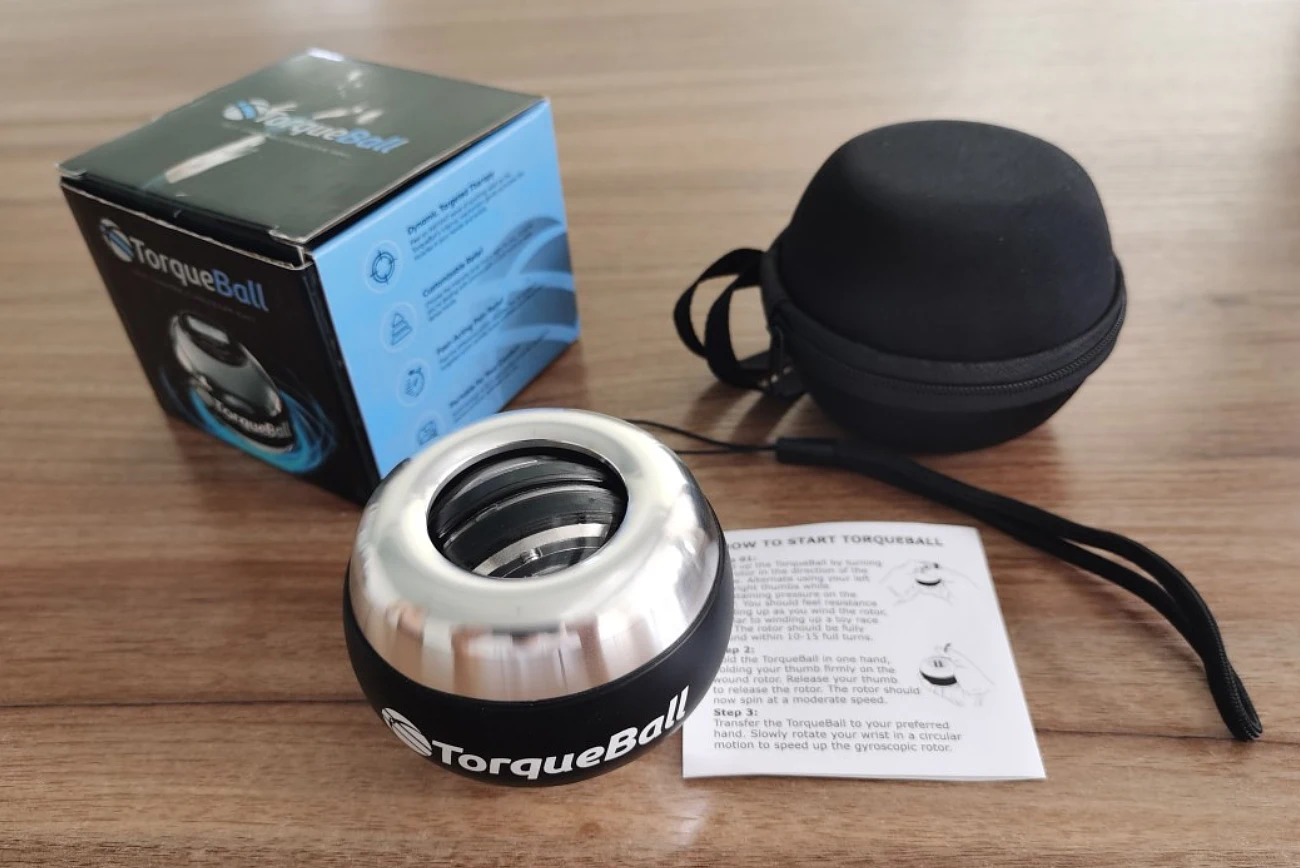
Every week, I see families resign
themselves to memory care.
But when it came to my father, I refused.
After decades in geriatric medicine, I knew what truly drives cognitive decline—and more importantly,
what can protect against it.
The pattern is predictable: forgotten appointments, misplaced objects, then the steady move toward
assisted memory care.
“It’s normal aging,” colleagues tell families. I’ve said those words myself, countless times.
But then my father forgot my son’s name.
The man who had meticulously built our family, who could recall the details of every project and
decision for decades, looked at his grandson with confusion and fear.
“I know it,” he murmured. “It’s right here… I can’t reach it.”
The brochures for memory care facilities were already stacked on my sister’s counter.
At 74, I understood the terror of losing your mind. Yet seeing my father struggle, I realized I had been
part of a system that accepts cognitive decline as inevitable rather than preventable.
Then I stumbled across a striking pattern: adults in certain regions of Japan retain their memory nearly
a decade longer than in the U.S.
The research pointed to diet—fish, green tea, seaweed—but the story didn’t end there. Something deeper
was at play.
The Moment Everything Clicked

With my father’s independence hanging in the balance, I applied for a research grant and traveled to
Japan, determined to understand what we were missing.
At first, it was frustratingly familiar. Fish-heavy diets. Green tea ceremonies. The same explanations
repeated in different accents by well-meaning experts.
None of it fully explained why cognitive decline seemed delayed here, while back home it felt almost
expected.
Then I noticed him.
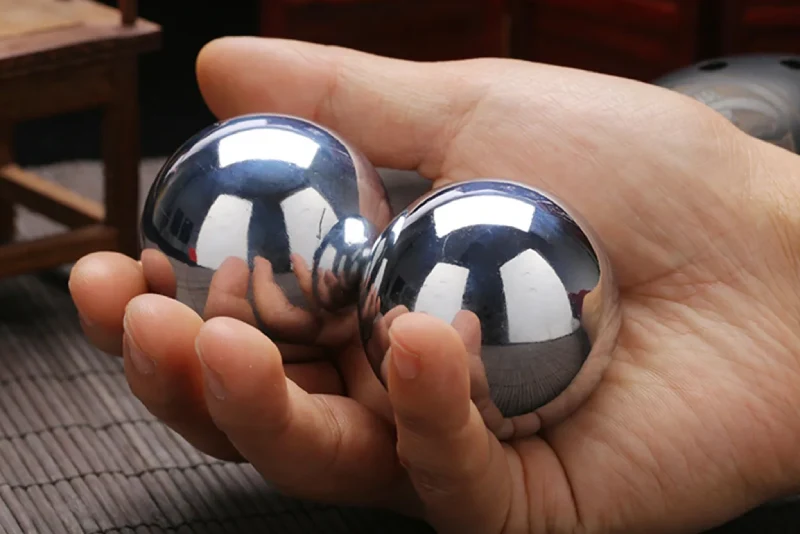
In the corner of a small community hall in Osaka, an elderly man sat quietly, rolling two small steel
spheres through his fingers with effortless control—smooth, continuous, almost musical.
I introduced myself. With the help of a translator, I learned he was 94.
“Baoding balls,” he said, smiling as he placed them in my palm. “Every day. Since my fifties.”
Later, the program coordinator shared more.
Mr. Nakamura lived alone on the fourth floor of a walk-up apartment. He cooked for himself. He tended a
small rooftop garden. Twice a week, he volunteered teaching brush lettering to local schoolchildren.
“Has his memory always been this strong?” I asked.
She laughed softly. “Here? This is not unusual. Many of our elders stay clear-minded well into old
age.”
And in that moment, I realized we’d been looking in the wrong place all along.
The following morning, I asked Takeshi about his daily
habits.
He shrugged. “When the hands stay active, the mind follows.”
As a doctor, I was familiar with the neural pathways linking hand movement and brain activity. But I had
always treated that relationship as associative—not decisive.
What if I was wrong?
What if inactive hands weren’t merely a sign of cognitive decline, but one of its drivers?
My thoughts returned to my father. Once-powerful carpenter’s hands now resting motionless in his
lap.
The same hands that built our home—now disconnected from the mind that once guided them. The names of
his grandchildren slipping just out of reach.
The Baoding balls clearly worked. Takeshi was undeniable evidence. But mastering them took patience.
Years, even.
My father didn’t have years.
So I asked myself a different question.
What if we could take this centuries-old practice and pair it with modern science? What if we could
stimulate the same hand–brain pathways—faster, more effectively, right now?
That question changed everything.
Almost overnight, I stopped thinking only as a physician. I became an inventor. Then, unexpectedly, an
entrepreneur.
Not for money. Not for prestige.
But because I couldn’t accept watching my father fade—when the possibility of helping him was already
within my grasp.
That’s When I Made the TorqueBall
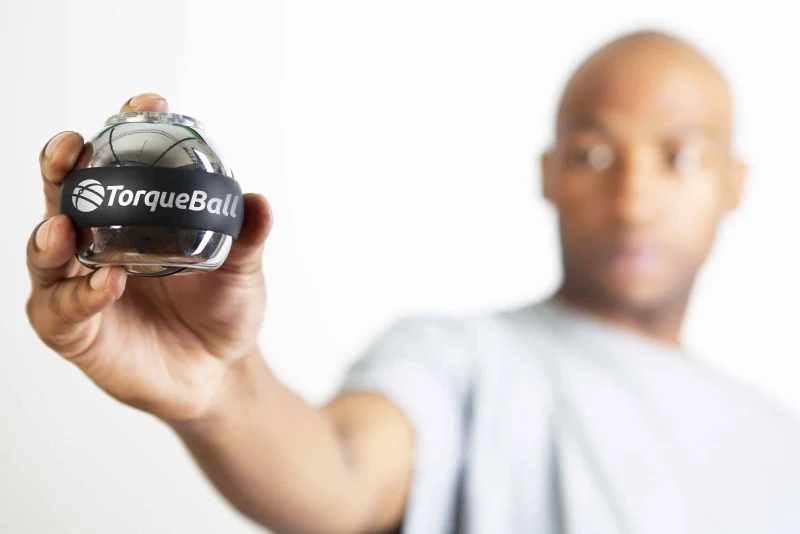
What if the breakthrough my father needed could fit in the palm of his hand?
The first prototype didn’t look special. Just a simple exercise ball. Nothing remarkable.
Then I switched it on.
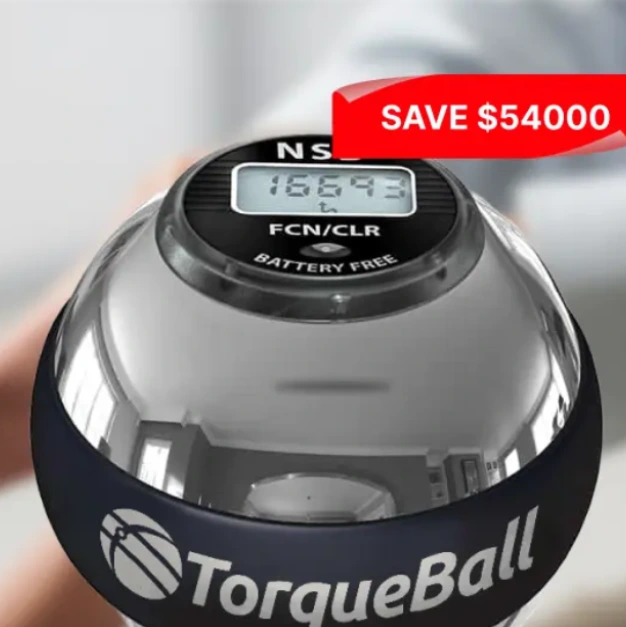
Hidden inside was a finely calibrated gyroscope—one that generated adaptive resistance, responding in
real time to the movement of the hand holding it.
With every rotation, different muscle groups activated in deliberate sequence. The hands stayed
alert.
The neural circuits stayed engaged. The brain stayed awake.
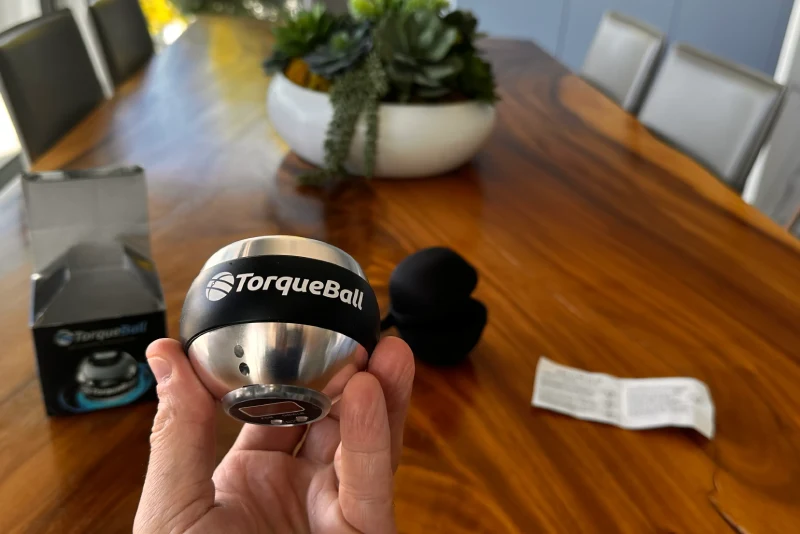
A small digital display lit up, showing rotation speed—his starting point. A baseline.
At the time, I had no idea how much that number would come to matter.
It soon became the most closely followed metric in my father’s day.
A daily score. A quiet indicator. A signal that his mind was no longer slipping—but returning.
And the commitment was simple.
Just five minutes a day.
My Father’s Return to Clarity

First session score: 1,120 rotations.
He frowned at the small screen.
“That’s awful,” he muttered.
“That’s not awful,” I said. “That’s a starting point. Tomorrow will be higher.”
Day 3: Mom called.
“He won’t put it down. Uses it during the news, during Jeopardy, even through the commercials. He’s up
to 1,450.”
Day 7: 1,895.
Dad answered the door himself.
“You’re early,” he said, glancing at his watch. “Thought you said two.”
He was right. I had—three days earlier.
Day 10:
“He’s answering Jeopardy questions before the contestants,” Mom whispered on the phone, as if saying it
too loudly might undo everything. “He hasn’t done that in over a year.”
Day 21: 3,200.
I found him in the garage—not just sorting tools, but labeling them. Carefully. In his own handwriting.
“If I don’t write it down while I know where everything belongs,” he said, “I’ll forget again.”
That awareness was back.
The ability to plan. To anticipate.
Day 42: I’ll never forget this day.
“Where’s Dad?” I asked Mom.
She pointed toward the garage, her hand covering her mouth, tears running down her face.
My heart dropped. Had he fallen? Was he hurt? Had the confusion returned?
I ran to the garage—and stopped cold.
There he was. Bent over his workbench, brushing a smooth finishing coat onto a piece of oak. His
hands—once still, once betraying him—moved with calm, practiced precision.
“Hey, kiddo,” he said without looking up. “Making a birdhouse for the Johnsons. Bluebirds moved back in.
Sialia sialis. Same species we had in ’68. You were seven. Remember watching the eggs hatch?”
The Latin name.
The year.
My age.
Details I had nearly forgotten.
In an instant, I saw the memory care brochures on my sister’s counter. The hushed conversations. The
quiet resignation we’d all been preparing ourselves for.
And standing there, watching him work, I knew we’d been wrong.
His hands were no longer idle.
And because his hands were working, his memories had returned.
That’s when I broke down.
“It’s alright,” he said softly, finally looking up—eyes clear, steady, present. “I’m not going
anywhere.”
Later that evening, my sister called.
“I threw out the brochures,” she said.
That was it. The conversation we’d feared for months was over before it ever began.
His score that day? 8,954.
But the numbers didn’t matter.
The memories did.
The Science Behind What Happened
I could overwhelm you with charts, studies, and complex diagrams of neural circuits. But here’s the part
that actually matters:
Your hands are one of the brain’s primary communication hubs.
Each hand contains 34 muscles, 27 bones, and an extraordinary density of nerve endings—more direct
connections to the brain than almost any other part of the body.
Most hand exercises barely scratch the surface.
Squeezing a stress ball? You activate a handful of muscles.
Stretching a rubber band? A few more.
But the majority remain inactive. And when muscles go unused, the neural connections tied to them weaken
too.
That’s where the TorqueBall works differently.
Every movement recruits the entire hand. Every rotation sends a cascade of signals back to the brain,
keeping those hand–brain pathways active and responsive.
Its textured, responsive surface forces constant adjustment—tiny corrections that prompt the brain to
adapt, reinforce existing pathways, and form new ones.
You’re not just moving your hands.
You’re giving your brain a reason to stay engaged.
One colleague at Johns Hopkins described it to me as “neuroplasticity you can hold.”
I think of it more simply.
Hope—with a power button.
The Effects Began to Multiply
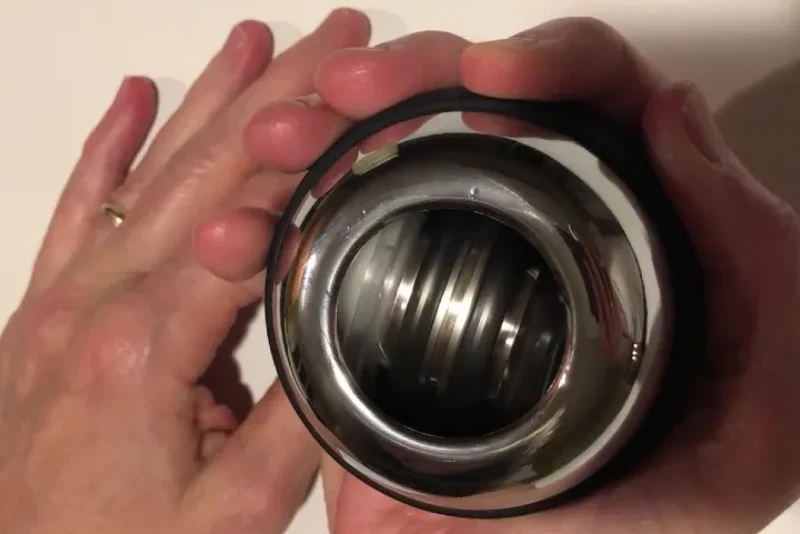
Especially when a 97-year-old man suddenly reappears—driving himself, recalling names, holding
conversations with ease—after years of worrying mental slips.
People started asking questions.
“What changed?”
“What’s he doing differently?”
I began loaning out a handful of spare prototypes. What followed made it clear this wasn’t chance.
Elaine Harper, 76
Former Whole Foods board member
“I kept dropping things. More frightening than that—I wouldn’t remember dropping them at all.
Conversations circled back on themselves. My daughter carefully mentioned the possibility of early dementia.
We toured care facilities. Everyone assured us memory units were ‘very comfortable now.’
After three weeks using your father’s device, something shifted. My grip improved—but so did my thinking.
I stopped repeating myself. I remembered appointments without reminders.
Last week I hosted my book club again. Twelve people. Hours of discussion. I followed every character, every storyline, and even remembered opinions from the previous meeting.
My daughter quietly canceled the facility visits.”
Then there was Thomas Caldwell, 83
Retired National Geographic photographer
“When your hands stop cooperating, your concentration goes with them. Photography was my identity for six decades—my hands were how I thought.
When they began shaking, everything else unraveled.
Six weeks with the TorqueBall steadied my hands first. Then my focus sharpened. Then memories surfaced I hadn’t accessed in years.
Last Tuesday I captured a hummingbird mid-flight at 300mm. Razor sharp.
But the real surprise was remembering the last time I photographed that species—1987, Costa Rica, cloud forest, late March.
As long as I can keep creating, I stay mentally sharp. This lets me keep creating.” That’s when I understood what was really happening.
This wasn’t about slowing decline.
It was about reactivating purpose.
When people regained control of their hands, they regained control of their minds.
And once that connection was restored, everything else followed.
Sofia Delgado, 68
Commercial real estate investor
“Here’s what no one talks about: the fear of losing your edge in real time.
I was sitting in a $2.8 million negotiation and realized I couldn’t remember the exact terms we’d agreed on ten minutes earlier. I started overcompensating—pages of notes, constant double- and triple-checking.
My business partner invited me to lunch. The serious kind.
‘Patricia,’ he said gently, ‘maybe it’s time to consider easing back.’ I was humiliated. And terrified.
Dr. Evans gave me this device. At first, I felt ridiculous—spinning a ball during CNBC segments like it was some novelty toy.
But two months later, something caught me off guard. I was in a meeting and started quoting figures from memory. No notes. No prompts. My assistant just stared at me.
Last week, I finalized a waterfront development deal. As we wrapped up, the attorney smiled and said, ‘You’re as sharp as ever, Ms. Delgado.’
He had no idea what ‘ever’ meant to me.
I sat in my car afterward and cried—not from stress, but from relief.”
Why Making TorqueBalls Is Harder Than Selling Them
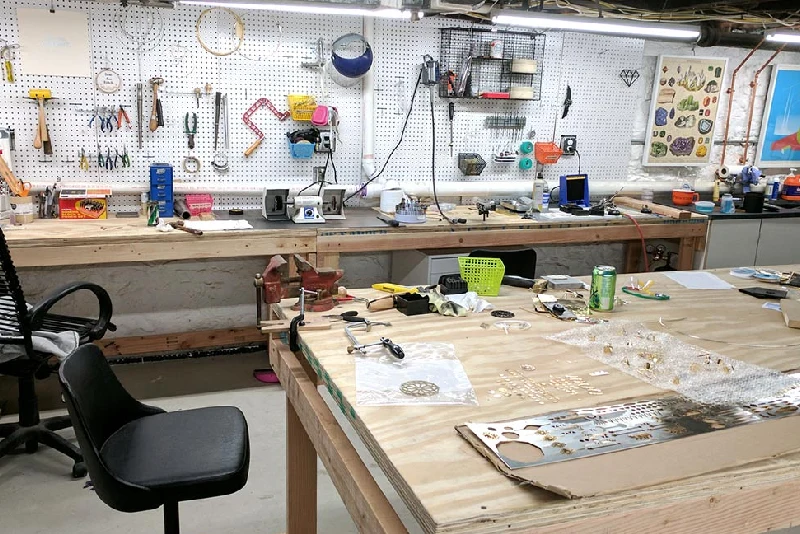
This is the part I don’t like writing.
With demand skyrocketing, our biggest challenge isn’t selling TorqueBalls—it’s actually building
them.
At the heart of each device sits a precision gyroscope, painstakingly hand-calibrated by my lead
engineer, John.
Even with his skill, he can only assemble and stress-test around 150 units per week.
We explored outsourcing to a larger manufacturer. Their test batch failed 40% of units within 30 days.
For them, that was acceptable.
For us, sending even one flawed unit to a senior trying to preserve their memory is unacceptable.
So we stick with Johnobsessive, hand-crafted process. “These are going to 97-year-old hands that built
this country,” he says. “We don’t cut corners.”
As of this morning, 212 units have passed his 72-hour stress test and are ready to ship. The last batch
sold out in under 48 hours—these will likely be gone by tomorrow evening.
Once they’re gone, the “Check Availability” button will lead to our waiting list. We hope to have the
next batch ready in 3–4 weeks, but shipments of the materials remain unpredictable.
My “Try It, Prove Me Wrong” Guarantee
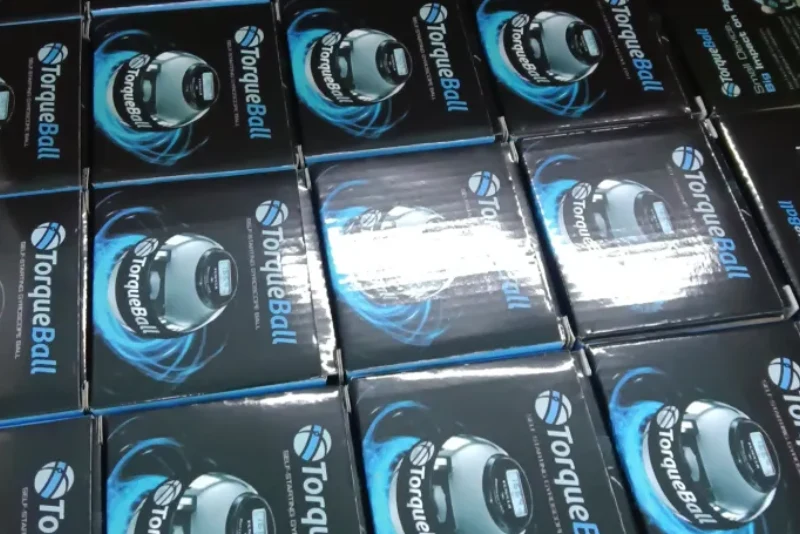
I get it—you’re skeptical. In a world full of miracle cures and empty promises, you should be.
That’s why I want to make this completely risk-free.
The price for a TorqueBall is $79.
Think of it instead as a fully refundable deposit.
Here’s my personal promise:
Take your TorqueBall. Use it for just 5 minutes a day.
Watch the number on the digital display.
If, within 90 days, you don’t notice:
Your grip improving…
Your hands feeling more capable and engaged…
Your mind feeling sharper, clearer, more present…
Or even if you simply don’t enjoy it—
Send us an email. We’ll refund every penny. No questions asked.
You don’t even have to return the device.
That’s right: if it doesn’t work for you, keep it, give it to a friend, or pass it along to someone who
might benefit.
Why would I make such an offer?
Because the return rate is less than 1%. It works. I’ve
seen it. And once you feel that satisfying whir
in your hand—and notice your mind sharpening—you won’t even think about sending it back.
I’m betting the full cost of the product on your results.
And we’ve included something extra I didn’t expect: a letter from Dad.
He insisted on writing to every TorqueBall owner.
Mom says she can’t read it without tears. Something about “one craftsman to another” and “hands that
still have work to do.”
The Bottom Line
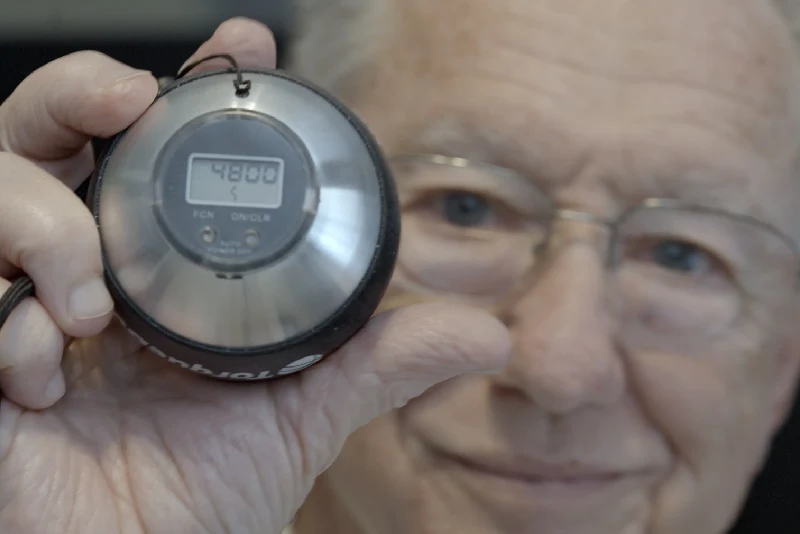
I think of Takeshi often—92 years old, teaching calligraphy, living fully, his mind as sharp as
ever.
All because someone showed him a simple practice 43 years
ago: never let your hands sit idle.
You might be reading this with hands that don’t feel as capable as they once did.
Maybe you’ve noticed the small betrayals: tremors, forgotten names, questions repeated.
Or perhaps you’re watching someone you love slowly drift into confusion.
Thinking it’s normal. Unavoidable. Part of getting older.
It’s not.
The Japanese understood this centuries ago, long before
modern science confirmed it: idle hands invite
cognitive decline. Active hands protect the mind.
Care for your hands, and they will protect your memories.
Dad is 97 now. Yesterday he installed a ceiling fan. Last week he taught his grandson to whittle.
Tomorrow? Who knows?
But one thing is certain: he won’t be in memory care. Not
this year. Not next year. Maybe not ever.
All because his hands stayed busy.
And because his hands stayed busy, so did his mind.
Lydia Parker
Can anyone confirm this actually works?
Nina Crawford
Replying to Lydia Parker: This little device is fantastic! My hands were stiff all day, typing especially. Just a few minutes with the TorqueBall while watching TV makes a huge difference.
George Whitman
I bought mine at full price last month… now it’s 50% off? That feels unfair!
Samantha Lowe
How long does shipping usually take?
Carolyn Rivers
Replying to Samantha Lowe: Mine arrived in about a week, super fast.
Ethan Cole
Just got mine for my wife too. It’s so relaxing on the hands—not what I expected from a small exercise gadget. A few times a week keeps my hands strong and flexible.
Harriet Brooks
Ordered mine today! Can’t wait to try it.
Martin Fields
Did anyone else notice an improvement in grip strength in just a few days?
Jessica Hayes
Replying to Martin Fields: Yes! After a week, my hands feel steadier and less tired. Perfect for typing and cooking.
Clara Simmons
I just bought one for my mom. She can finally hold her coffee cup without shaking. Works like a charm.
Daniel Reed
Love this gadget! Takes just a few minutes and already feels effective.
Fiona Marshall
Replying to Daniel Reed: Was skeptical at first… but I’m genuinely impressed. My hands feel stronger and my joints hurt less.